
🌿 The Whispering Shadows of Abruzzo: The Mazzamurelli and the Vanishing Memory of Italy’s Forgotten Spirits
Deep within the stone villages and mist-covered valleys of Abruzzo, something still moves behind the walls. Not quite a ghost, not quite a memory—small, unseen hands that knock softly in the night. They are the Mazzamurelli, Italy’s forgotten household spirits, and their story is still being told… but only just. As the last elders fade, so too does one of Europe’s most mysterious folk traditions.

Elaris Windglimmer
Ancient Folklore & Oral Traditions Archivist
Specialized in ancient European Mythology, and Norse Oral Traditions
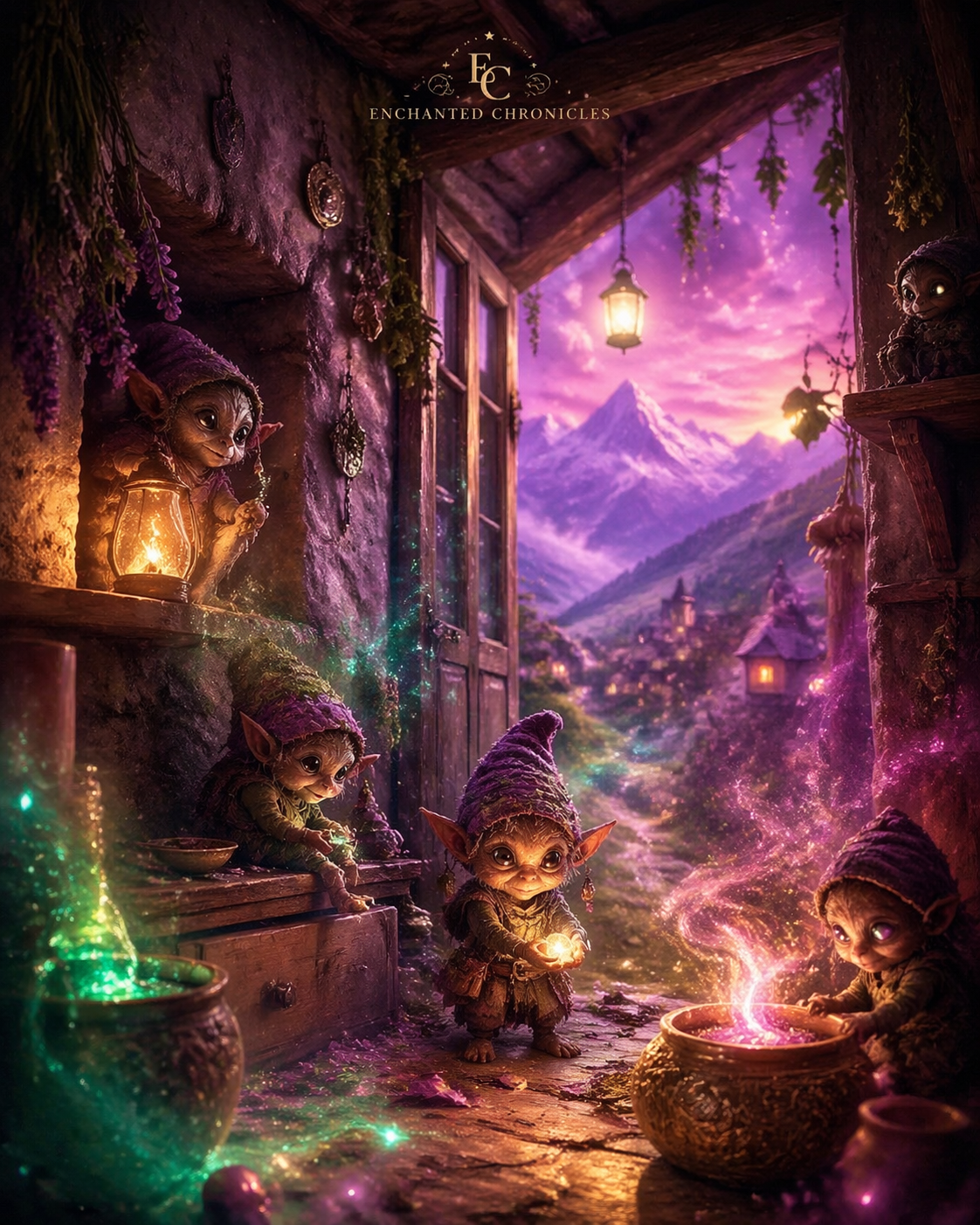
🏔️ The Mazzamurelli: Spirits Between Walls and Worlds
In the mountainous heart of central Italy, especially across Abruzzo and parts of the Marche, the legend of the Mazzamurelli persists as part of an ancient oral tradition rooted in rural life.
These beings are described as small, elusive spirits—sometimes playful, sometimes ominous—who inhabit homes, barns, and mountain villages. According to folk belief, they reveal themselves through subtle signs: knocking within walls, shifting objects, or strange nocturnal sounds that defy explanation.
Far from being simple ghosts, they belong to what scholars call the “Piccolo Popolo” (Little People), a broader European folkloric category that includes creatures similar to brownies, kobolds, and leprechauns.
🕯️ A Living Myth Still Present in Rural Memory
Even today, in some isolated Abruzzese villages, older generations still speak of the Mazzamurelli as if they were present.
The belief is not entirely extinct. Instead, it survives in fragments—half-remembered warnings, childhood stories, and superstitions whispered during winter nights.
Traditionally, the Mazzamurelli are interpreted in multiple ways:
- As messengers of hidden danger
- As signals from the dead
- Or as guardians of hidden treasure beneath the home
Some villagers believe their presence indicates that something important is about to happen within the household—good or bad.
This ambiguity is precisely what kept the legend alive for centuries: the Mazzamurelli are never fully defined, only experienced.
🌲 The Mountain Origins: Born in the Sibillini Lore
The mythological roots of these spirits extend into the broader cultural landscape of the Apennines, particularly the Monti Sibillini region.
Here, folklore describes a world where natural and supernatural realities overlap. The Mazzamurelli are considered part of this ecosystem of enchanted beings, alongside mountain fairies and oracular spirits tied to caves, winds, and underground realms.
In this tradition, they act as intermediaries between worlds—the living and the dead, the visible and the invisible.
Rituals, Protection, and Everyday Magic
In traditional Abruzzese households, fear of the Mazzamurelli was not necessarily negative. Instead, it shaped daily ritual behavior.
To protect themselves or to “negotiate” with these spirits, families used folk practices such as:
- Leaving salt near doorways
- Hanging garlic bundles on entrances
- Reciting prayers or blessings at night
- Placing symbolic objects to confuse or distract the spirits
These rituals reflect a worldview in which the home was not just a physical space, but a living threshold between worlds.
🐾 The Slow Disappearance of an Oral Tradition
Today, however, the Mazzamurelli are fading.
Modernization, urban migration, and the decline of oral storytelling have weakened the transmission of these legends. In many villages, only elderly populations still recall them in detail. Younger generations often know the name but not the meaning.
Even within academic and folkloric studies, the Mazzamurelli are increasingly treated as cultural artifacts rather than living beliefs.
Yet this transition carries a risk: once a story is no longer told aloud, it becomes archaeology rather than memory.
🌙 Why the Mazzamurelli Still Matter Today
Despite their fading presence, the Mazzamurelli remain culturally significant for several reasons:
- They preserve pre-modern interpretations of domestic space
- They reflect Italy’s deep connection between nature and spirituality
- They reveal how rural communities explained the unknown
- They embody a uniquely European “house spirit” tradition
In a broader sense, they are reminders that folklore is not simply myth—it is a way of organizing reality.
🔍 A Legend Still Knocking in the Walls
The Mazzamurelli remain suspended between belief and disappearance.
They are not just creatures of the past—they are echoes still vibrating inside stone walls, in the creak of wooden beams, in the imagination of those who still listen closely at night.
And perhaps that is their true nature: not to be seen, but to be remembered.
❄️ FAQ – The Mazzamurelli
What are the Mazzamurelli?
The Mazzamurelli are small mythical beings from Italian folklore, especially in parts of Abruzzo. They are often described as tiny spirits or goblin-like creatures.
Are they dangerous?
Not usually. In most legends, they are mischievous rather than harmful—playing tricks on people or causing minor disturbances.
Where do they live?
Folklore says they hide in old houses, abandoned buildings, or underground places, especially in rural villages.
What do they look like?
Descriptions vary, but they are typically imagined as very small humanoid figures, sometimes wearing old-fashioned clothes or hats.
Would you like to discover other Realms…. Come this way…
Join our community of readers register for our newsletter!