The Tornit: The Forgotten Giants Who Walked Before the Inuit
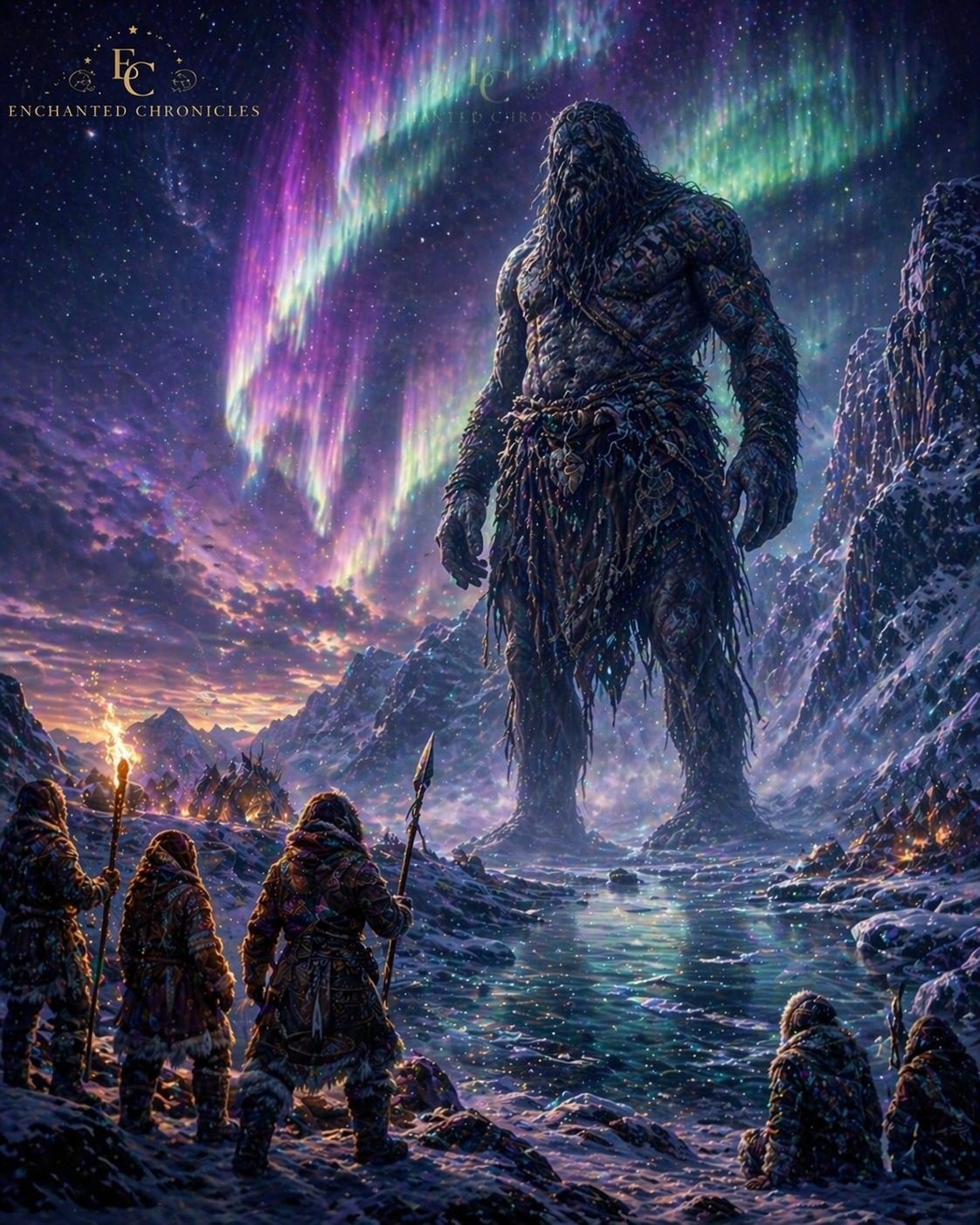
Long before the Arctic silence settled over the frozen lands of the North, something else walked there. Larger than men. Stronger than storms. The Tornit—a vanished race of giants—are said to have shared the world with the first Inuit peoples.
Today, their footprints remain only in stories… and those stories are fading into the snow.
Rowan Ashmere
Celtic Folklore Historian & Oral Tradition Archivist
Specialized in Inuit, Sámi, and Northern Indigenous Oral Traditions
Giants of the Arctic Past
Across the oral traditions of Inuit communities in northern Canada and Greenland, the Tornit are remembered as a powerful and ancient people.
Described as giant humanoid beings, they are said to have lived in the Arctic long before or alongside early Inuit ancestors.
Unlike the spirits or shapeshifters found in other mythologies, the Tornit were often portrayed as physical beings—real, tangible, and deeply connected to survival in extreme environments.
In many accounts, they possessed:
- Extraordinary physical strength
- Great endurance in harsh climates
- A primitive or solitary way of life
- Limited communication or social interaction
They were not divinities. They were something closer to a forgotten humanity.
Encounters in the Ice: Coexistence and Conflict
In Inuit oral history, the relationship between humans and Tornit is complex.
Some stories describe peaceful coexistence—two peoples sharing the same vast and unforgiving land, rarely interacting.
Others tell of tension.
The Tornit are often depicted as:
- Shy or reclusive beings who avoided human contact
- Easily frightened despite their immense size
In several narratives, Inuit hunters are said to have outwitted the Tornit, using cunning rather than strength to survive encounters.
Over time, these interactions led to a gradual disappearance of the giants.
🧭 Echoes of a Lost People
What makes the Tornit especially fascinating is how they blur the line between myth and memory.
Unlike purely supernatural beings, they are often framed as a previous population, suggesting a possible cultural memory of real encounters with unknown groups.
Some researchers have speculated that the Tornit stories may reflect distant memories of:
- Early Arctic inhabitants predating Inuit migrations
- Encounters with different human groups
- Symbolic representations of “the other” in a harsh survival landscape
While there is no scientific confirmation of giant humanoids, the consistency of these stories across regions gives them cultural weight.
🔥 Oral Tradition: The Fragile Thread of Memory
The story of the Tornit exists almost entirely through oral storytelling.
For generations, elders passed down these accounts:
- Around fires in winter darkness
- During hunting journeys
- Through teaching stories meant to guide survival and behavior
But today, this transmission is weakening.
Modern life, language loss, and generational shifts mean fewer young people hear these stories in their original form. What was once a living memory risks becoming fragmented folklore.
🌍 A Living Legacy in Inuit Identity
Even as the literal belief in the Tornit fades, their presence still resonates.
They represent:
- The deep history of Arctic peoples
- The relationship between humans and unknown forces
- The importance of intelligence over brute strength
- The memory of a time before recorded history
In this sense, the Tornit are not just giants of the past—they are part of Inuit cultural identity.
Why the Tornit Still Matter Today
The legend of the Tornit speaks to something universal.
Across cultures, stories emerge of beings who came before—larger, stronger, but ultimately replaced. These narratives often reflect humanity’s attempt to understand its own origins.
But the Tornit are unique in one crucial way:
They are not framed as monsters.
They are remembered as another people. And that distinction matters. It transforms the story from fantasy into something closer to ancestral memory.
🌍 Giants Beneath the Snow
The Tornit no longer walk the Arctic. No tracks remain in the snow. No voices echo across the ice. But in the quiet stories still told by those who remember, they have not disappeared.
They are waiting—just beneath the surface of memory. And like all oral traditions, their survival depends on one fragile thing: Someone willing to tell the story again.
📜 Sources & Cultural References
The Tornit are documented in Inuit oral traditions and ethnographic research:
- Inuit oral histories collected across Arctic Canada and Greenland
- Arctic ethnographic archives and anthropological studies
These sources confirm that Tornit narratives are deeply embedded in Inuit cultural memory and are not modern inventions.
Explore our our Atlas of Mythologies
Mesoamerican Mythology
African Mythology
World Atlas of Mythologies
Urban Legends
Himalayan Mythology
Latin American Mythology
Celtic Mythology
❄️ FAQ – The Tornit
Who were the Tornit?
Ancient giant humanoid beings from Inuit oral tradition, believed to have lived before or alongside early Inuit peoples.
Were the Tornit real?
There is no scientific evidence, but the stories may reflect memories of ancient populations or symbolic narratives.
Why did the Tornit disappear?
According to legend, they were gradually outsmarted and replaced by human populations.
Why is this legend important?
It preserves Inuit cultural memory and highlights the importance of oral storytelling traditions.
Would you like to discover other Realms…. Come this way…
Join our community of readers register for our newsletter!