The Sacred Cenotes: Ancient Portals Where the Maya Spoke to the Dead
Hidden beneath the jungles of Yucatan lie pools so beautiful they seem unreal. But for the ancient Maya, cenotes were never simple bodies of water. They were sacred openings into another world — places where spirits listened, where rituals echoed through stone chambers, and where offerings disappeared into the darkness below.
Even today, the Sacred Cenotes remain wrapped in mystery. Travelers swim in their crystal waters while local legends still whisper that these ancient sinkholes are alive… watching silently beneath the surface.

Lirien Thornveil
Folklore Researcher & Mythology Writer
🌿 Beneath the Jungle, the Earth Opens
At first glance, the cenotes of Mexico appear almost heavenly.
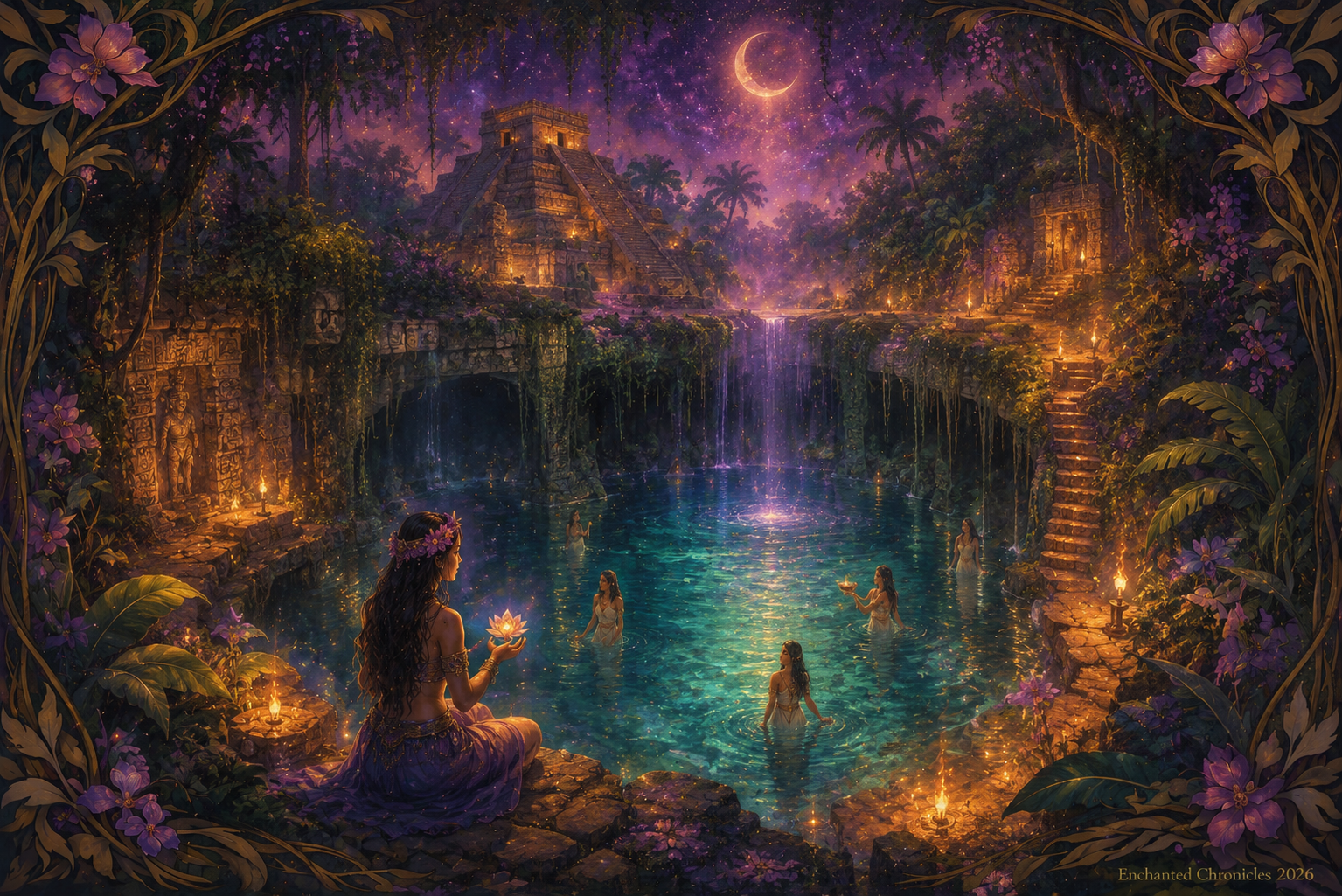
Sunlight pierces through hanging vines. Emerald water glows beneath limestone caves. Tropical birds sing overhead while roots descend from the jungle canopy like ancient fingers reaching toward hidden depths.
But for the Maya civilization, these places inspired something deeper than admiration. They inspired fear.
The Sacred Cenotes were believed to be portals to Xibalba — the mysterious Underworld described in Maya cosmology. Hidden beneath the earth, Xibalba was not merely a place of death. It was a realm of spirits, trials, transformation, and divine forces beyond human understanding.
The Maya believed certain cenotes connected the world of the living to this invisible realm.
To approach these waters was to stand at the edge of another universe.
🌙 The Meaning of Cenotes in Maya Culture
The word “cenote” comes from the Yucatec Maya word dzonot, meaning “sacred well.” These natural sinkholes formed when limestone caves collapsed, revealing underground freshwater systems that stretch beneath the Yucatán Peninsula.
In a region with very few rivers, cenotes became essential sources of life.
But they quickly became something more.
The Maya saw them as sacred breathing points of the earth itself — places where the natural and supernatural worlds touched.
Ceremonies were performed beside them.
Prayers echoed through their cavern walls.
Offerings were lowered into the water in hopes of receiving protection, rain, fertility, or guidance from unseen forces.
Some cenotes became pilgrimage sites visited for generations. Others gained darker reputations.
🌺 The Most Feared Cenote in Maya History
Among all sacred sinkholes, none became more legendary than the Sacred Cenote of Chichén Itzá.
This massive natural well stood beside one of the greatest Maya cities ever built.
According to both archaeological discoveries and historical accounts, precious objects were cast into its waters for centuries — gold, jade, obsidian, pottery, and ritual offerings.
But the stories did not end there… Researchers and divers later discovered human remains beneath the surface.
Ancient accounts suggest ceremonial sacrifices may have taken place during periods of drought, crisis, or spiritual importance.
The cenote became both sanctuary and threshold.
A place where humans attempted to communicate directly with powers hidden beneath the earth.
Even today, many visitors describe an eerie silence surrounding the water. As if the place remembers…
🌊 Echoes of Xibalba: The Underworld of the Maya
To understand why cenotes became sacred, one must understand Xibalba.
In Maya mythology — particularly within the Popol Vuh traditions — Xibalba was a shadowy underworld ruled by terrifying supernatural beings associated with disease, death, fear, and trials. But unlike later Western ideas, Xibalba was not simply evil. It represented transition. Transformation. The unseen cycle between life and death.
Caves, underground rivers, and cenotes were viewed as entrances into this hidden dimension. Descending into these spaces symbolized crossing spiritual boundaries. The deeper one traveled beneath the earth, the closer one moved toward the realm of spirits.
This belief still echoes through modern folklore in parts of southern Mexico and Guatemala.
Some local stories warn travelers not to disrespect cenotes. Others speak of whispers heard near the water after dark. And many communities continue to treat these places with reverence, even in the modern era.
🐾 Why the Legend Still Fascinates the World Today
The Sacred Cenotes have become one of the most visually captivating and emotionally powerful legends connected to ancient Mesoamerica.
Part of their enduring power comes from contradiction. They are breathtakingly beautiful. Yet deeply unsettling.
Crystal-clear waters conceal unknown depths. Sunlit caves hide stories of ritual offerings and forgotten ceremonies. Tourists swim where ancient prayers once echoed.
This collision between paradise and mystery creates a unique emotional impact that continues to fascinate travelers, historians, artists, and mythology lovers around the world.
On social media, cenotes have become symbols of hidden worlds. But many modern posts reduce them to aesthetic destinations, ignoring the profound spiritual significance they held for the Maya people.
The oral traditions surrounding these sacred waters are slowly fading. And with them disappears a deeper understanding of how ancient civilizations perceived nature not as scenery, but as something alive.
🌙 The Sacred Cenotes in Modern Folklore
Even today, cenotes remain spiritually important in many regions of the Yucatán.
Some ceremonies are still performed near the water.
Local guides continue sharing stories passed down through generations.
And many residents avoid entering certain cenotes after sunset.
Modern Maya communities often describe these places as spiritually sensitive.
Not cursed. Not evil. Simply ancient. There is a belief that respect matters.
Visitors are encouraged not to shout, pollute, or behave carelessly near sacred waters. Because according to local tradition, the cenotes are listening.
🔍 A Legend Slowly Sinking Into Silence
The tragedy of the Sacred Cenotes is not that they disappeared. It is that their meaning is disappearing.
Millions admire the beauty of these waters every year. Far fewer understand the stories attached to them.
As oral traditions weaken and sacred narratives become simplified online, much of the mythology surrounding the cenotes risks fading into aesthetic tourism.
But the ancient Maya never saw these waters as attractions. They saw them as thresholds. As living spiritual places connecting humanity to forces larger than itself. And perhaps that is why the Sacred Cenotes still feel mysterious today.
Because somewhere beneath the emerald water and limestone shadows, the old stories are still waiting.
❄️ FAQ – Sacred Cenotes Explained
What are Sacred Cenotes?
Sacred Cenotes are natural sinkholes formed in limestone regions of the Yucatán Peninsula. The ancient Maya considered many of them spiritually significant and believed they connected the human world to the underworld.
Why were cenotes sacred to the Maya?
The Maya relied on cenotes as vital freshwater sources, but they also believed these waters were gateways to spiritual realms such as Xibalba. Rituals, offerings, and ceremonies were often performed there.
Were sacrifices really made in cenotes?
Archaeological evidence from sites like Chichén Itzá suggests ritual offerings — including valuable objects and human remains — were placed into certain sacred cenotes during ancient ceremonies.
What is Xibalba?
Xibalba is the underworld described in Maya mythology. It was associated with death, transformation, spiritual trials, and supernatural forces.
Would you like to discover other Realms…. Come this way…
Join our community of readers register for our newsletter!