
The Silent King of Thresholds:
Invisible Sovereign of Doors and Crossings
In medieval Europe, doors were not neutral. Discover the Silent King who ruled over every crossing and still echoes in our instincts today.
He had no crown, no throne — yet every doorway belonged to him.

By : Nissa Moonstar
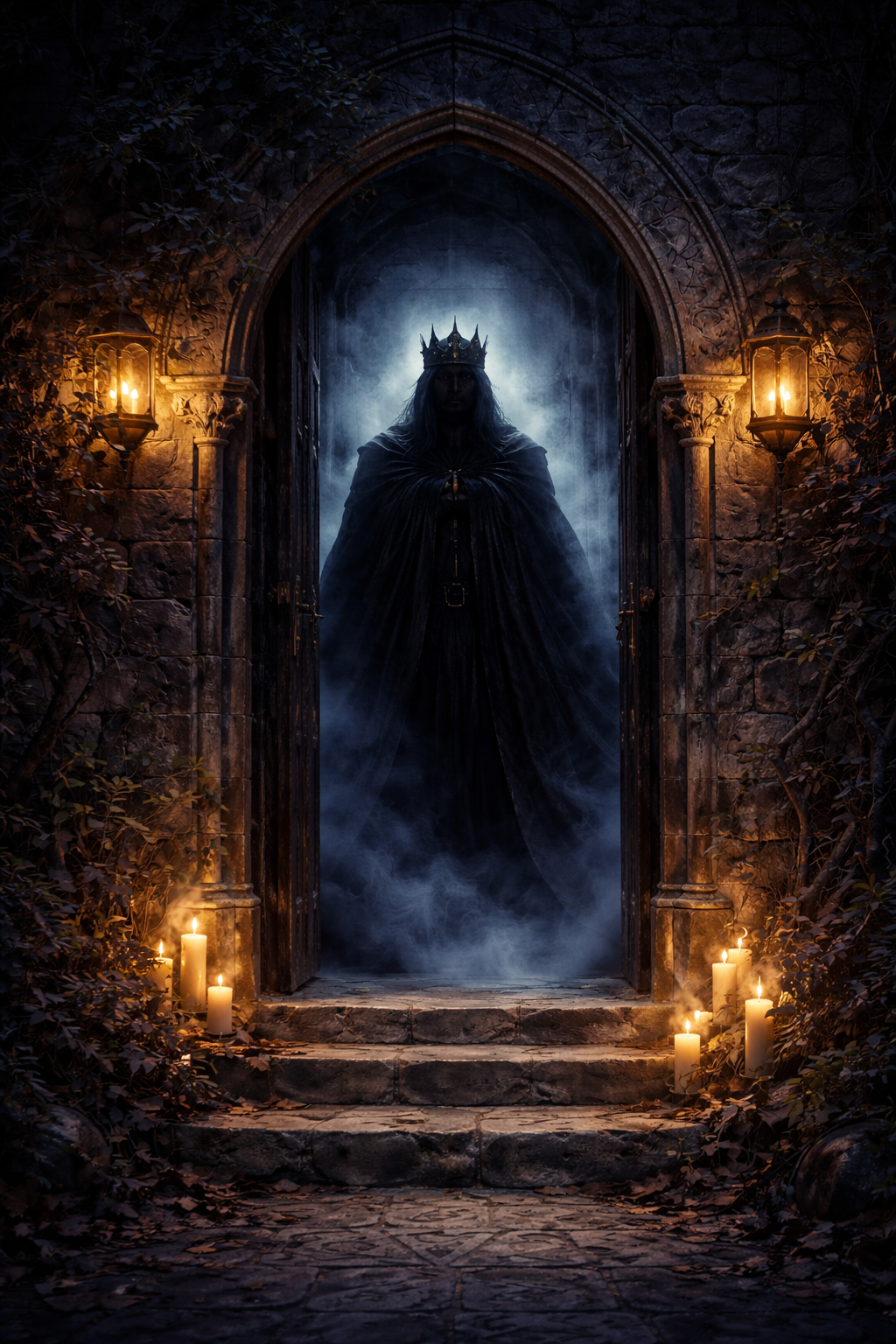
The Sovereign Who Ruled Doors, Gates, and Crossings
When Europe Believed Every Passage Was Watched
In medieval Europe, there was a quiet certainty shared across villages, monasteries, and isolated farmsteads: no threshold was neutral.
Doors, gates, bridges, and crossings were not merely functional spaces. They were zones of risk and power, moments where protection thinned and unseen forces gathered. According to documented folklore and ritual practices, these liminal spaces were believed to fall under the authority of an invisible sovereign known today as the Silent King of Thresholds.
He did not rule lands.
He ruled passage.
A King Without a Throne
Unlike crowned monarchs, the Silent King had no palace, no army, and no public rituals in his name. His authority manifested only at moments of transition: entering, leaving, crossing, beginning, ending.
Medieval belief systems across Central and Western Europe held that thresholds were moments when order loosened. To step through a doorway was to briefly exist between worlds—inside and outside, past and future, safety and danger.
The Silent King governed that instant: “What stands between is never empty.”
Origins in Medieval European Folklore
The figure of a threshold guardian sovereign emerges indirectly from Christian-era door-blessing rites
Pre-Christian Germanic and Roman customs, and Monastic rules concerning silence and crossings.
Folk practices surrounding New Year’s Eve, Christmas Night, and Epiphany
In these traditions, thresholds were:
– Washed with blessed water
– Marked with symbols or chalk
– Guarded by spoken or unspoken invocations
The authority behind these acts was rarely named — but always assumed.
The Nights When He Ruled Most Strongly
The Silent King’s influence was believed to peak during sacred nights, especially: Christmas Eve, The Twelve Nights, New Year’s Night and Epiphany Eve. These were considered liminal nights, when the boundaries between years, realms, and destinies were temporarily unstable.
– Doors were not slammed.
– Gates were not left open.
– Crossroads were avoided.
To cross carelessly was to invite misfortune — not as punishment, but as withdrawal of protection.
Why Silence Was Essential
Silence was not submission. It was recognition.
In medieval Europe, speaking loudly while crossing a threshold was discouraged. Whistling, shouting, or arguing at doorways was believed to disrupt the balance of the crossing.
The Silent King did not tolerate noise because noise asserted control. Silence acknowledged that the passage belonged to something greater than the traveler: “Those who rushed through were noticed.”
Thresholds as Moral Tests
Folk narratives reveal a deeper layer: thresholds were moments of ethical exposure.
– You crossed carrying intentions — good or ill.
– You entered with truth or deception.
– You left with gratitude or resentment.
The Silent King was believed to observe without intervening, allowing the crossing itself to reveal consequences later.
This belief shaped behavior: Guests paused before entering, Travelers hesitated at bridges, New Year’s first steps were chosen carefully, so every crossing mattered.
A Sovereign Who Never Appeared
The Silent King was never described visually. No face. No crown. No body.
His presence was inferred through:
– Unease at doorways
– Sudden chills at gates
– The instinct to pause
This absence made him powerful. He did not demand belief. He operated whether one believed or not.
Why This Legend Still Resonates
Modern life is filled with thresholds:
– Life changes
– Decisions are made
– Departures and arrivals
The legend of the Silent King survives not as superstition, but as intuition. We still hesitate before knocking. We still pause before entering something new. We still feel that some moments deserve silence.
The legend endures because crossings never stopped mattering.
The Unanswered Question
Medieval people believed the Silent King never disappeared. He simply became harder to notice. So, “What if he still rules every door, will you now hesitate before entering?
🌿 Try our Interactive Game
The Trial of the Threshold
You stand before an ancient threshold. No door. No lock. Only the presence of the Silent King — watching.
Join our community of readers Subscribe To our newsletter!

Enchanted Chronicles: Ignite the Myths Within
Step into a world where ancient myths are no longer confined to books—they are part of your journey.
Sign up for free!
We won’t send you spam.
Unsubscribe at any time.