The Leprechaun: an iconic figure
Origins of the Leprechaun
The leprechaun’s roots trace back to ancient Celtic mythology, where the boundary between the human world and the supernatural was believed to be thin and constantly shifting. The name “leprechaun” is generally linked to the Old Irish word luchorpán, meaning “small body,” though some scholars also connect it to words referring to spirits or water beings — suggesting that the earliest leprechauns may have evolved from older nature spirits tied to rivers, hills, or sacred landscapes.
These mythical beings are often associated with the Aos Sí, a supernatural race said to inhabit the Otherworld — a parallel realm woven into the Irish landscape itself. Rather than a distant heaven or underworld, this realm was thought to exist just beyond perception: inside ancient mounds, beneath lakes, or within mist-covered hills. To ancient Irish communities, such places were not merely scenic — they were thresholds where the ordinary and magical overlapped.
Unlike many fairies who traveled in groups or courts, leprechauns were usually solitary figures. They were known as shoemakers to the fairy folk, endlessly hammering away at tiny shoes. Folklore often describes people hearing the faint tapping of a hammer in quiet fields or woods — a sign, some believed, that a leprechaun was nearby. Their gold coins, supposedly earned through this meticulous work, became one of their defining traits.
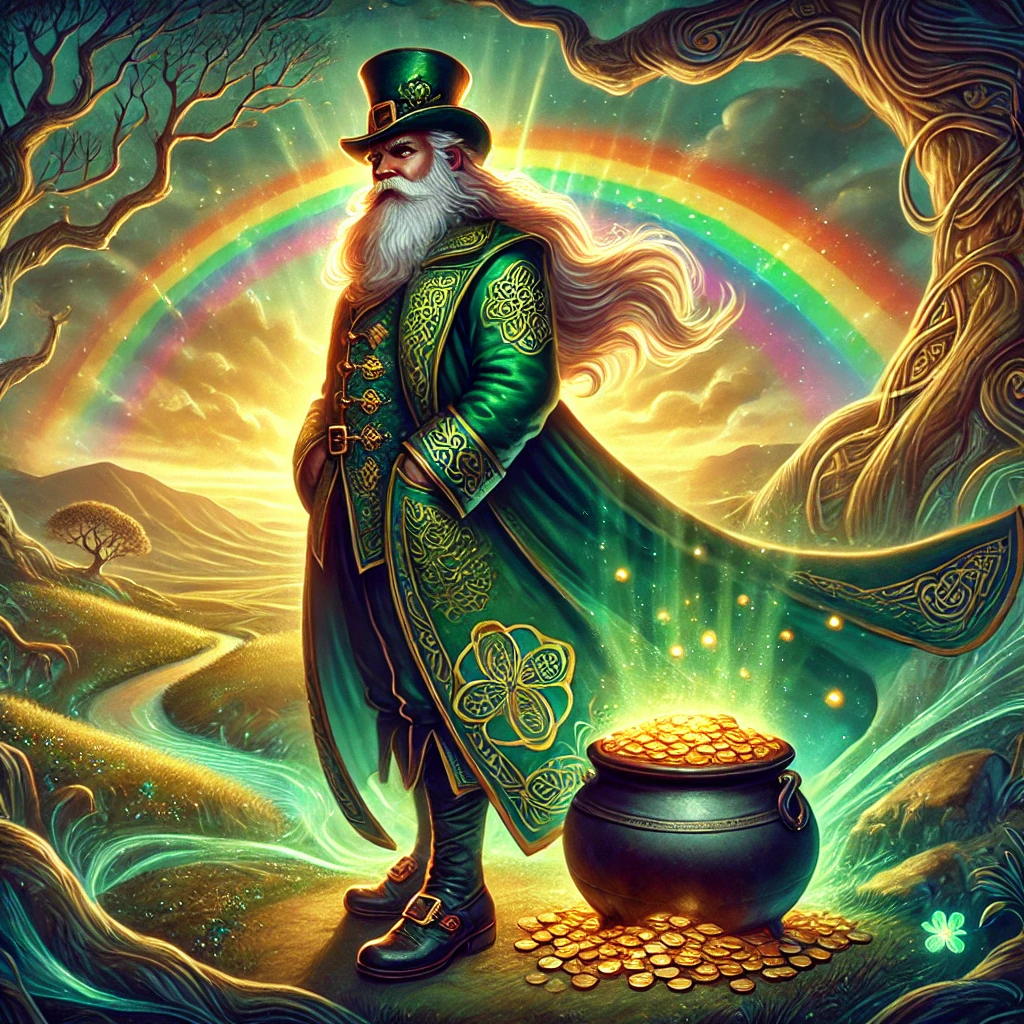
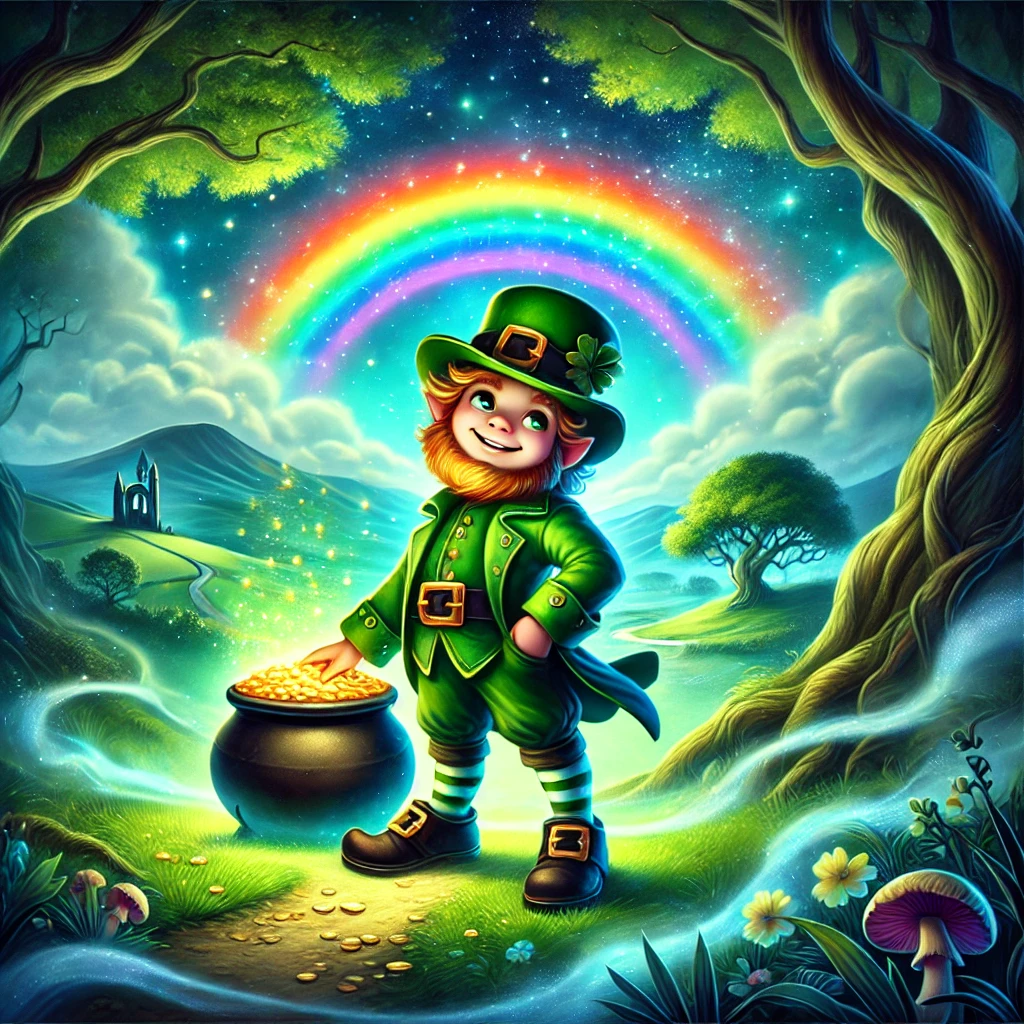
The famous pot of gold at the end of the rainbow reflects a deeper symbolic idea: rainbows, always visible yet unreachable, represent the elusive nature of wealth, luck, and magic.
In other words, the treasure was never meant to be easily found — it was a reminder that some rewards remain just beyond human grasp.
Historical Context and Cultural Significance
The leprechaun’s story evolved gradually through Ireland’s oral storytelling tradition. One of the earliest literary references appears in the medieval tale Echtra Fergus mac Léti (“The Adventure of Fergus son of Léti”), dating to around the 8th century.
In this story, the king Fergus encounters small supernatural beings who grant wishes when captured — establishing a narrative pattern that would later shape leprechaun folklore.
Over time, the leprechaun became more than just a magical cobbler. Some historians interpret the figure as a cultural reflection of resilience. Ireland’s long history of hardship — from invasions and political struggles to famine and migration — fostered a cultural admiration for wit, adaptability, and subtle resistance. The leprechaun, clever and difficult to outsmart, embodies these qualities.
During the 19th century, Irish emigration spread these stories far beyond the island. As communities settled abroad, especially in North America, folklore became a way to preserve identity and heritage. The leprechaun traveled with them, gradually transforming from a complex folkloric figure into a recognizable cultural symbol.
The Leprechaun in Popular Culture
Today, the leprechaun is one of the most recognizable symbols associated with Ireland. The green suit, red beard, buckled hat, and mischievous grin are now familiar worldwide, particularly during St. Patrick’s Day celebrations. However, this modern image is a simplified evolution of older traditions rather than a faithful representation.
In contemporary media — from advertising mascots to films and festivals — the leprechaun often appears cheerful and whimsical, associated with luck, prosperity, and harmless trickery. In traditional folklore, however, they were more ambiguous. They could be helpful if respected, but they were also cunning and fiercely protective of their gold. Attempting to trick a leprechaun usually resulted in embarrassment or loss for the human involved.
This dual nature — charming yet elusive — contributes to their enduring fascination.
Moral Messages Hidden in the Legend
Beneath the playful imagery lies a surprisingly layered moral framework. One of the most consistent themes is the danger of greed. Stories often describe humans capturing a leprechaun and demanding his treasure, only to be cleverly deceived. The message is subtle but clear: wealth gained through shortcuts or coercion rarely lasts.
Another recurring lesson concerns patience and effort. The leprechaun’s gold is not stolen or magically created; it is earned through careful, repetitive labor. His endless shoemaking serves as a symbolic reminder that persistence, craftsmanship, and diligence are honorable paths to success.
There is also a deeper philosophical note: the impossibility of reaching the rainbow’s end suggests that some forms of happiness cannot be captured materially. The legend encourages appreciation of wonder rather than possession of it.
Keeping the Magic Alive
Despite centuries of change, the leprechaun remains an enduring figure in both Irish culture and global imagination. Some Irish towns have embraced this heritage playfully, organizing themed storytelling events, folklore walks, and family activities that keep the legend alive without claiming literal belief.
Museums, schools, and cultural organizations continue to collect and share traditional Irish folklore, ensuring that these stories are preserved not only as entertainment but as expressions of identity, creativity, and history.
For children especially, the leprechaun represents curiosity and imagination. The legend invites them to consider a world where mystery still exists — where a quiet tapping in the distance might hint at something magical, and where nature itself may hold hidden stories waiting to be discovered.
So the next time a rainbow arcs across the sky, pause for a moment. Perhaps there isn’t truly a pot of gold waiting at its end — but the enduring magic of the story, passed down for generations, is a treasure in itself.
And if your curiosity grows, you might even visit Ireland, where museums, storytellers, and landscapes alike keep the spirit of the leprechaun very much alive..