The Aluxes:
The Mischievous Mayan Spirits Still Feared in Yucatán
Tiny guardians of the jungle… or ancient tricksters who still roam Mexico’s ruins?

By : Lirien Thornveil
Folklore Researcher & Mythology Writer
Specialized in Mesoamerican and European Legends
What are the Aluxes
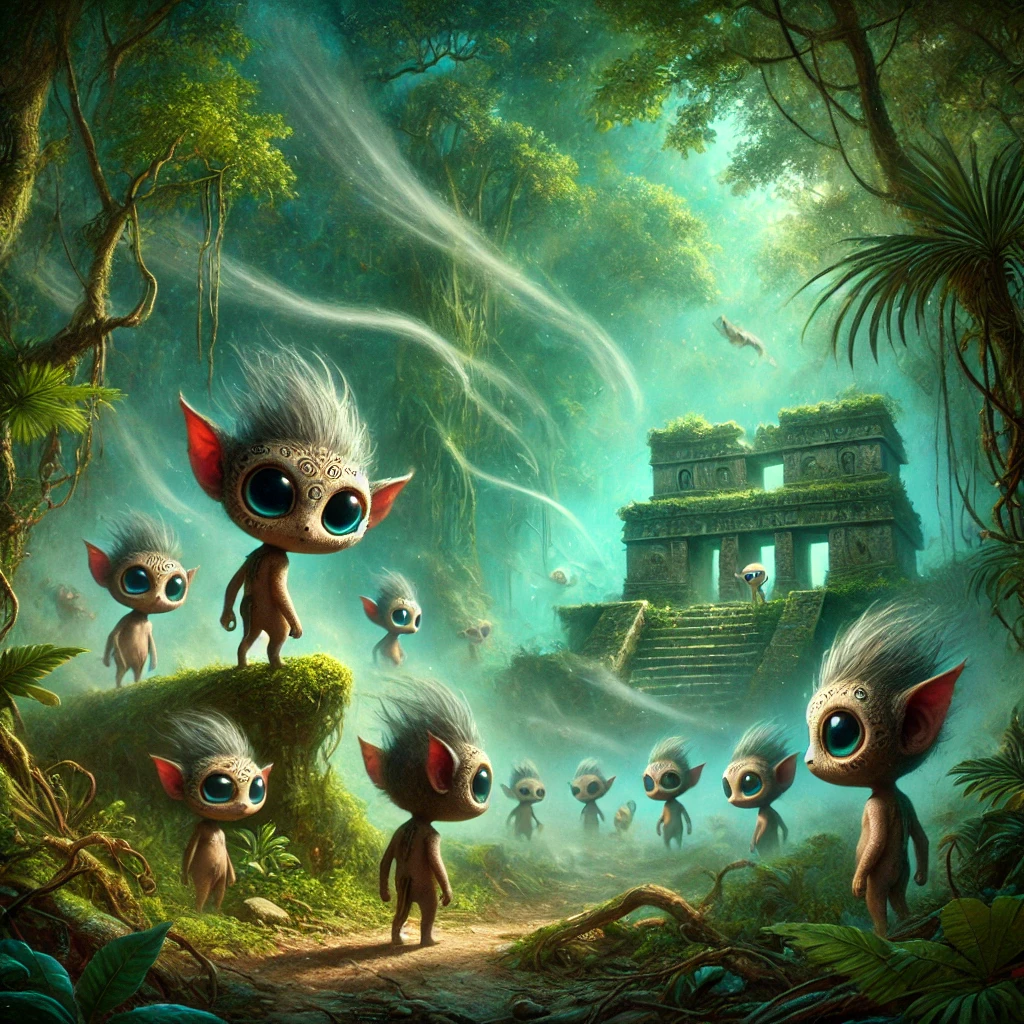
The Aluxes are small supernatural beings from Mayan mythology, believed to protect forests, crops, and sacred lands across the Yucatán Peninsula (Mexico). Considered both guardians and tricksters, they reward respect—and punish neglect.
They are still part of living folklore in Mexico, Belize, and Guatemala today.
Aluxes at a Glance
- Origin: Mayan mythology
- Region: Yucatán Peninsula
- Nature: Nature guardians & tricksters
- Associated with: Forests, crops, sacred ruins
- Offerings: Food, tobacco, alcohol
- Shrines: “Kahtal alux” stone houses
- Modern belief: Still present in rural communities
The Origins of the Aluxes in Mayan Cosmology
Belief in the Aluxes dates back to the Classical Maya period (250–900 CE), though some scholars suggest the tradition may be older.
According to oral tradition, these beings were shaped from clay, corn, and sacred elements—similar to humans in Mayan creation myths. However, unlike humans, they were granted eternal youth. Small in stature but powerful in spirit, they exist between the physical and spiritual worlds.
– Their primary role is to protect nature.
The Maya viewed the natural world as sacred. Forests, cenotes, fields, and ruins were not inert landscapes—they were alive. They acted as intermediaries, ensuring humans respected that balance.
Guardians of the Fields: The Kahtal Alux Tradition
For centuries, Mayan farmers built small stone shrines called kahtal alux at the corners of their fields.
These miniature houses were not symbolic—they were invitations.
It was believed that once summoned through ritual, an Alux would live inside the shrine for seven years, protecting crops from:
– Thieves
– Wild animals
– Pests
– Drought
But there was a warning.
If neglected or disrespected, the same spirit could turn mischievous—hiding tools, frightening livestock, leading travelers astray, or even causing illness.
After seven years, the shrine was traditionally sealed to prevent the spirit from becoming unruly.
Spanish Colonization and Survival of the Legend
When Spanish colonizers arrived in the 16th century, Catholicism spread rapidly across Mesoamerica. Many indigenous beliefs were suppressed or blended with Christian traditions.
Yet the legend survived.
In rural communities across Yucatán, Belize, and Guatemala, offerings to these spirits never fully disappeared. Instead, the belief adapted—becoming part of a syncretic cultural identity that remains visible today.
Modern Encounters: Do People Still Believe in Aluxes?
Surprisingly, yes.
In the 1990s, construction workers building a bridge near Cancún reported repeated accidents and unexplained malfunctions. Local elders suggested the project had disturbed an Alux dwelling.
Following traditional advice, a small shrine was built near the construction site. Soon after, the strange incidents reportedly stopped.
Today, visitors to the Yucatán may hear guides at sites like Chichén Itzá and Tulum share stories of shadowy figures, whispers in the jungle, or sudden gusts of wind attributed to these elusive beings.
Some resort developers even include discreet altars on their properties—just in case.
Are Aluxes Evil or Benevolent?
The answer depends on perspective. Aluxes are neither demons nor angels. They embody balance.
– Respect nature → they protect you.
– Exploit the land → they retaliate.
This duality mirrors many global folklore traditions, including the duendes of Iberian legend and the hidden forest spirits of northern Europe. Across cultures, small nature beings often serve as guardians of ecological boundaries.
Strange and Lesser-Known Facts About the Aluxes
1. Invisible by Choice
They are said to reveal themselves only to believers—or those they wish to warn.
2. Linked to Wind and Whirlwinds
Some elders interpret small dust spirals as Aluxes traveling between realms.
3. Possible Messengers of the Underworld
Certain traditions associate them with Xibalba, the Mayan underworld, suggesting a deeper cosmological role.
4. Childlike but Not Harmless
Despite their small size, they are described as powerful spiritual entities capable of influencing real-world events.
Anthropological Perspective: Symbol or Spirit?
From a modern anthropological viewpoint, the Aluxes may represent:
– A cultural mechanism for environmental protection
– A spiritual expression of ecological ethics
– A continuity of pre-Columbian cosmology
Belief in them reinforces respect for land and sacred spaces—something deeply embedded in Mayan worldview.
Rather than dismissing them as superstition, many scholars view Alux traditions as evidence of enduring indigenous identity.
FAQ About the Aluxes
What are Aluxes in Mayan mythology?
Aluxes are small supernatural beings believed to guard forests, crops, and sacred sites in the Yucatán region.
Are Aluxes still believed in today?
Yes. Some rural communities in Mexico, Belize, and Guatemala continue to leave offerings and build shrines.
Where are Aluxes found?
Primarily in the Yucatán Peninsula, including areas around Cancún and ancient Mayan archaeological sites.
Are Aluxes good or evil?
They are considered morally neutral—protective when respected, mischievous when ignored.
What is a kahtal alux?
A small stone shrine built to house and honor an Alux spirit.
Final Thoughts: Guardians or Tricksters?
If you walk through the dense jungles of Mexico or wander among the ancient ruins of Chichén Itzá at dusk, you may feel it:
– A presence just beyond sight.
– A whisper carried by wind.
– A reminder that not all guardians are visible.
The Aluxes endure—not just as folklore, but as symbols of a worldview where nature is sacred, alive, and watching.
And perhaps… still protected.
Would you like to discover other Realms…. Come this way…
Join our community of readers register for our newsletter!