
Samodiva, Vila, Iele — When the Forests of the Balkans Still Watched Us
The Samodiva, Vila, and Iele are not fairy tales. They are echoes of a time when forests were alive, boundaries mattered, and beauty could destroy you

Elaris Windglimmer
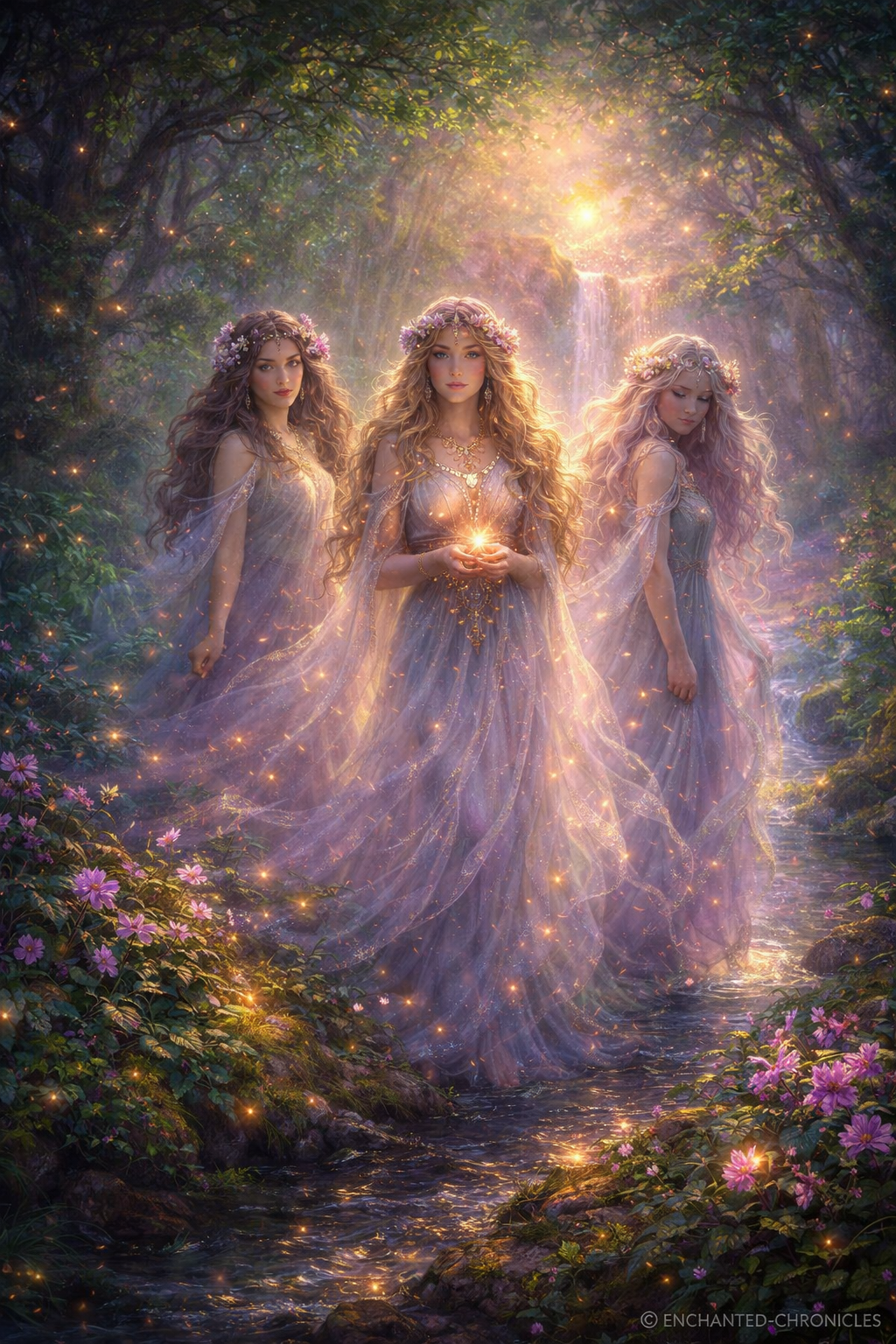
Samodiva, Vila and Iele: Enchanting Spirits of Medieval Balkan folklore
Long before borders were drawn on maps, before churches crowned the hills and before roads cut through the wilderness, the forests of the Balkans were believed to be alive.
Not metaphorically alive. Truly, dangerously alive.
Travelers spoke of moments when the wind fell silent without warning, when rivers seemed to pause in their course, and when the air itself grew heavy, as if something unseen had stepped closer. In those moments, people knew where they were.
They had entered the domain of the Samodiva.
Who Are the Samodiva?
The Samodiva are ancient Slavic nature spirits rooted in Balkan folklore, known by different names across the region — Vila in Serbia and Croatia, Iele in Romania. They are not fairies in the Western sense, nor goddesses, but something older and more elusive: embodiments of wild nature itself. Dwelling in forests, near springs, rivers, and mountain clearings, Samodiva are believed to govern fertility, weather, and the hidden balance between the human world and the natural realm. Invisible by day and revealed by moonlight, they appear most often at liminal moments — dawn, dusk, midsummer nights — when the boundaries between worlds grow thin.
The Samodiva appeared near springs hidden beneath roots, along mountain rivers that never froze, or in clearings where grass grew in perfect circles. Those who claimed to have seen them struggled to describe their beauty without fear. Their faces were radiant, but their eyes reflected something inhuman — ancient, patient, and cold. Their hair flowed freely, as if untouched by gravity, and their white garments shimmered like moonlight caught in mist.
Yet it was not their appearance that terrified people most. It was their silence.
The forests did not rustle when they passed. Animals did not flee. Everything simply waited.
Villagers believed the Samodiva were bound to the land itself. They were born of forests, water, and wind, and they guarded these places with ruthless devotion. A man who drank greedily from a spring without offering thanks might fall ill days later, his strength draining as if the water were being taken back from him.
But the most feared stories were those of the dance.
On certain nights — especially in late spring and at the threshold of summer — shepherds swore they heard singing drifting through the valleys. The sound was irresistible. Men followed it without realizing they had left the safety of their fires behind. In moonlit clearings, the Samodiva danced in circles, their bare feet never touching the ground. The grass beneath them flattened perfectly, leaving marks that remained long after dawn.
To watch was forbidden. To join was fatal.
Those who stepped into the circle lost more than time. Some returned mute, their eyes unfocused, as though still watching something only they could see. Others collapsed with fevers that no herb could cure. A few, it was said, survived — but never unchanged. These rare individuals were believed to have gained the gift of healing or prophecy, though at the cost of restless nights and a permanent sense of longing, as if part of their soul had remained behind in the forest.
As time passed, in rural communities these beings were remembered as older than churches, older than kings — not embodiments of evil, but forces bound to balance. They did not punish sin, but transgression. They did not demand obedience, but respect. Their justice followed the laws of the land itself, not those written by men.
So the belief adapted instead of disappearing.
Offerings were left quietly by springs. Songs were sung softly at forest edges. Certain places were avoided entirely after sunset. Parents warned their children not with fairy tales, but with memories.
By the 19th century, scholars and folklorists began writing these stories down, racing against time as modern life crept into even the most remote villages. What they recorded was remarkably consistent across regions and languages. The Samodiva had endured because they explained something people still felt: that nature was not passive, and that crossing certain boundaries came at a price.
Today, the forests are quieter, but the legends remain.
In Bulgaria, Romania, and Serbia, people still point to strange clearings and say, “They danced there.” In folk songs, the Vila appear as tragic figures — beautiful, eternal, and forever apart from humanity. Modern writers and artists return to them again and again, not as harmless fairies, but as reminders of a world where the land itself watched who walked upon it.
The Samodiva survive because they occupy a space we have not entirely lost. They live at thresholds — between civilization and wilderness, belief and doubt, past and present. And sometimes, when the forest grows unnaturally still, it feels as though they are listening, waiting to see whether we remember how to behave.
Choose another Realm for more stories
Join Our Community of readers – Register for our Newsletter!