Amethyst Gemstone Folklore: Ancient Traditions Still Alive Today
For centuries, the amethyst has been more than a beautiful violet gemstone. Across civilizations, it was believed to protect the mind, calm the soul, and bridge the human world with the divine.
Long before modern spirituality and crystal healing trends, ancestral traditions shaped a powerful folklore that still resonates today.
From ancient Greece to medieval Europe and beyond, the story of the Amethyst is a living thread woven through history, belief, and imagination.
The Ancient Origins of Amethyst Folklore
Greeks believed the stone protected against drunkenness and excess. Goblets were carved from amethyst, and soldiers wore it into battle to maintain clarity of mind.
One of the most enduring legends links the gemstone to Dionysus, divinity of wine. According to later classical interpretations, remorse and divine intervention transformed clear crystal into violet stone — a symbol of balance between passion and restraint.
This belief was not symbolic alone: it reflected how ancient societies valued mental control, moderation, and wisdom.
Sacred Stone of Egypt and the Afterlife
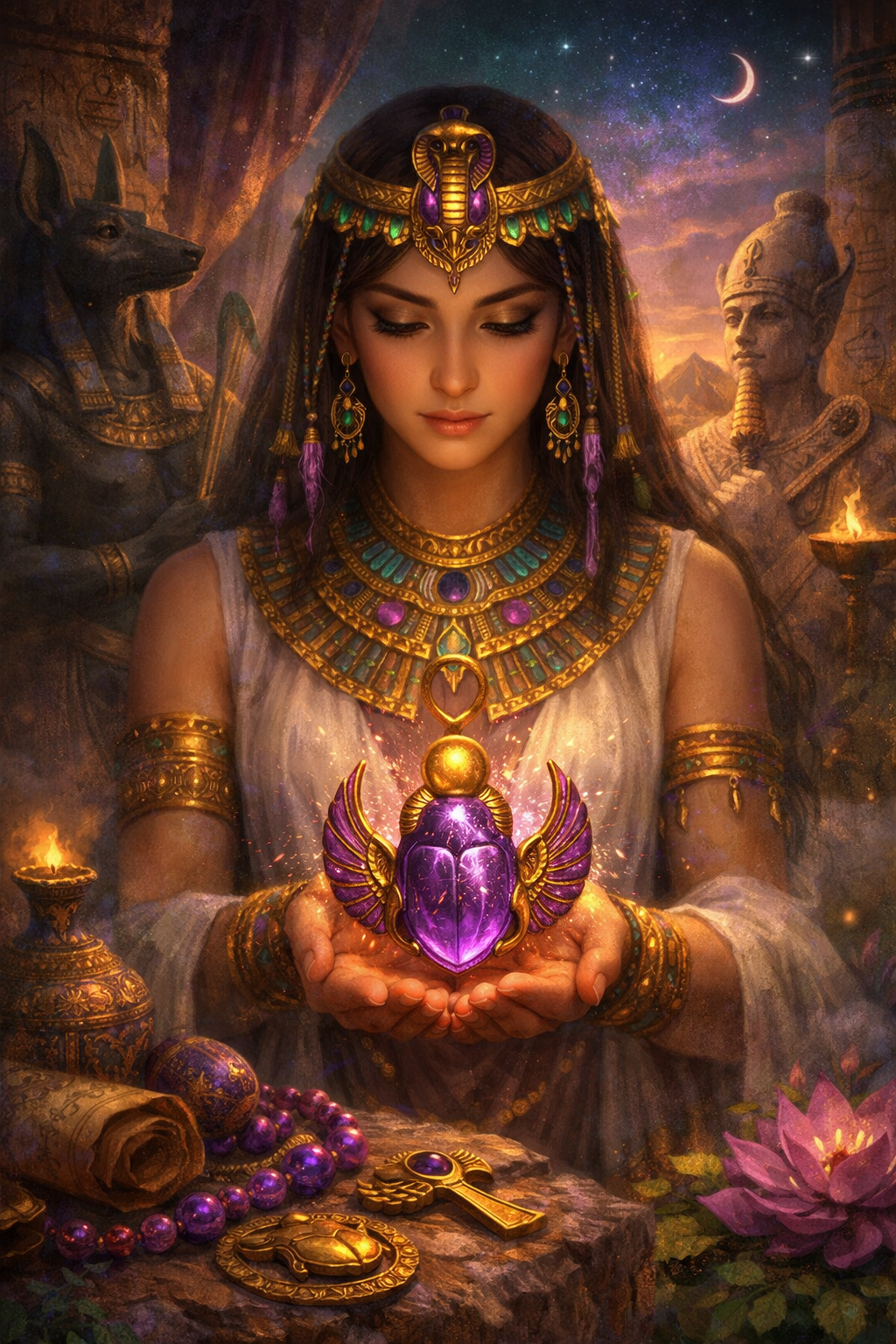
In Ancient Egypt, the amethyst was carved into scarabs, beads, and amulets. Archaeological findings show its presence in tombs, where it was believed to protect the soul during its journey beyond death.
Egyptians associated amethyst with spiritual clarity and rebirth, linking its purple hue to both royalty and the divine. The stone was not decorative — it was ritualistic, deeply tied to ancestral views of eternity.
Medieval Europe: Faith, Power, and Protection
During the Middle Ages, amethyst became known as the “bishop’s stone.” High-ranking clergy wore amethyst rings as symbols of humility, purity, and spiritual vigilance.
It was believed to ward off temptation and strengthen one’s connection to the Divine. This tradition persists today: amethyst rings are still worn by bishops in several Christian denominations — a rare example of living folklore surviving uninterrupted through centuries.
How These Traditions Live On Today
Modern interpretations of amethyst echo ancient beliefs almost uncannily.
Today, the stone is associated with:
– Mental clarity
– Emotional balance
– Spiritual awareness
– Protection from negative energy
Whether used in meditation, placed in homes, or worn as jewelry, amethysts continues to fulfill the same symbolic role it did thousands of years ago — helping humans navigate chaos with calm and intention.
What has changed is the language, not the meaning.
Why Amethyst Still Fascinates Us
Folklore survives because it speaks to universal human needs: protection, understanding, transcendence. Amethyst endures because it represents inner order in a disordered world.
In a modern age hungry for meaning, ancient stones remind us that wisdom is often inherited, not invented.
Continue the Journey ✨
If this story resonated with you, explore our other articles on ancestral legends, sacred gemstones, and forgotten traditions.
👉 Every stone has a story. Every myth has a reason.